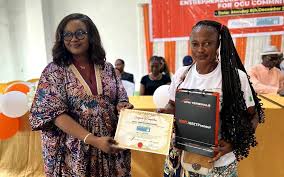
In a major effort to enhance food security and strengthen climate resilience across northern Nigeria, the Foundation for Sustainable Smallholder Solutions (FSSS), in partnership with the HEINEKEN Africa Foundation, has trained 28 community seed producers and distributed over 1,000 agricultural inputs to local farming hubs across Bauchi State. The initiative was carried out under the Empowerment of Smallholders to Thrive and Build Climate Resilience through Regenerative Agriculture (ESTRRA) project to directly target a severe local shortage of high-quality, certified seeds and affordable farm inputs.
The intervention directly responds to findings from a 2026 FSSS baseline assessment, which revealed that 87% of smallholder farmers in northern Bauchi rely on saved or uncertified local seed varieties, while only 12% have access to improved or certified seeds. To address this gap, FSSS conducted an intensive two-day training workshop in Azare for representatives from seven Community-Based Organisations (CBOs), with women comprising more than half of the participants. The program provided practical instruction on producing certified seeds for key local crops including rice, millet, sorghum, groundnut, and cowpea covering seed quality management, varietal purity standards, field inspection techniques, official certification protocols, and agribusiness management. To ensure immediate implementation, each participating CBO received foundation seeds, fertilisers, and crop protection products to establish at least 21 total hectares of community seed multiplication fields across Bauchi North.
Enjoying this article? Share it with your network!
Alongside technical training for seed producers, FSSS provided business management instruction to Farmers Hub managers in inventory tracking, pricing, and financial record-keeping. Essential supplies including fertilisers, crop protection chemicals, herbicides, seed treatment products, and knapsack sprayers, were distributed across 11 Farmers Hubs in seven Local Government Areas, including Katagum, Zaki, Giade, Itas-Gadau, Shira, and Jama’are. Mohammed Dahiru, Manager of the Bulkachuwa Farmers Hub, noted that before this project, local farmers had to travel long distances to buy quality inputs, but having products stocked locally now allows them to access what they need at the right time without spending extra money on transportation. FSSS Senior Agronomist Dr. Abubakar Hassan emphasized that the ESTRRA project focuses on creating sustainable local ecosystems rather than delivering short-term aid, equipping local communities with both technical knowledge and production resources to build stronger seed systems that will continue serving farmers long after the project ends.
Information provided by Edfrica is for awareness purposes only and does not constitute a guarantee or endorsement.