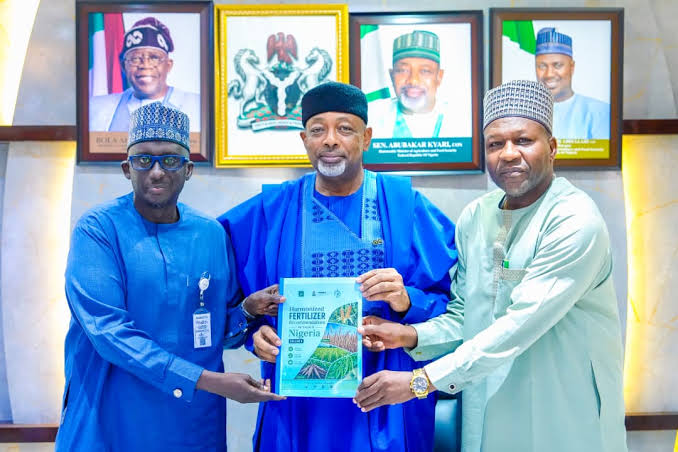
The Federal Government has officially introduced the Harmonized Fertiliser Recommendations for Nigeria 2026 Edition, a new agricultural framework designed to improve farming productivity and strengthen food security nationwide.
The manual was presented in Abuja by the National Agricultural Development Fund (NADF) alongside Farm Input Support Services (FISS) and key agricultural stakeholders.
According to officials, the framework provides updated fertiliser recommendations tailored to Nigeria’s different soil conditions and agroecological zones. The guide currently focuses on five major crops critical to national food supply:
Enjoying this article? Share it with your network!
- Rice
- Maize
- Wheat
- Cassava
- Cowpea
The initiative was developed in collaboration with the Fertiliser Producers and Suppliers Association of Nigeria (FEPSAN), OCP Group, and the International Fertilizer Development Center (IFDC).
Experts involved in the project said the manual aims to reduce poor fertiliser practices, improve soil management, and help farmers make more profitable input decisions. It also introduces modern farming techniques such as Integrated Soil Fertility Management and the globally recognised 4Rs nutrient stewardship model.
Minister of Agriculture and Food Security, Senator Abubakar Kyari, described the framework as a major step toward modernising Nigeria’s agricultural system. He also called for the guide to be translated into local languages and distributed through digital extension platforms to improve rural access.
Agriculture stakeholders believe the updated framework could improve crop productivity, reduce input waste, and support long-term sustainability in Nigeria’s farming sector.